
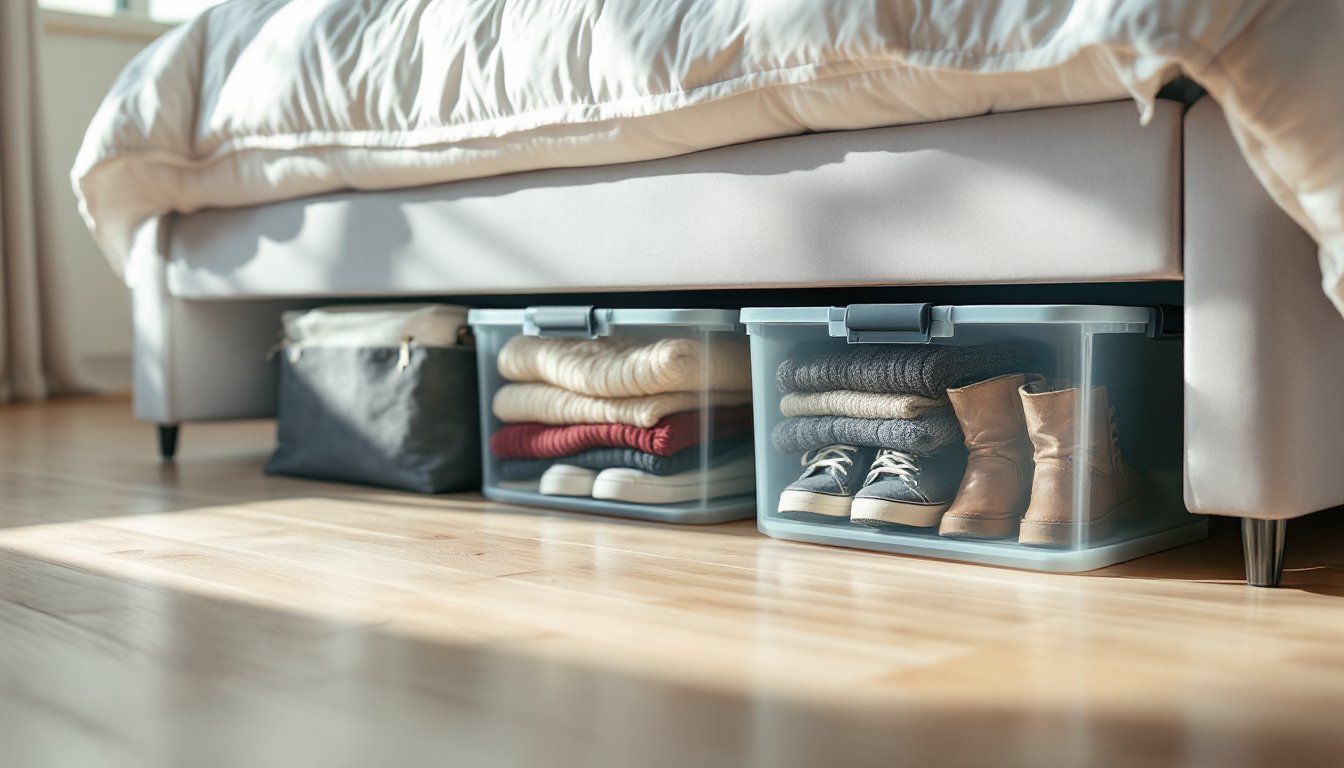
Most bedrooms sit on top of 10-15 cubic feet of completely wasted real estate. That gap between the mattress platform and the floor collects dust bunnies, forgotten socks, and the occasional lost phone charger, but it could be holding seasonal clothes, extra bedding, hobby supplies, or shoes instead. Under the bed storage bins turn dead space into functional square footage without adding a single shelf to the wall or claiming closet territory. Whether someone’s dealing with a tiny apartment bedroom or just trying to reclaim a walk-in closet from chaos, the right bins make a measurable difference in livable space and daily sanity.
Table of Contents
ToggleKey Takeaways
- Under the bed storage bins transform 10-15 cubic feet of wasted bedroom space into functional storage without requiring wall installation or closet space, making them ideal for apartments and shared rooms.
- A queen-size bed offers approximately 16 cubic feet of under-bed storage capacity using 6-inch-tall bins—equivalent to a small dresser—while keeping seasonal and infrequently used items accessible but out of sight.
- Choose hard plastic bins for moisture-sensitive items like books and electronics, fabric organizers for lightweight textiles and bedding, and rolling containers for items accessed frequently or for anyone with mobility concerns.
- Measure bed clearance carefully at the lowest point and subtract 1 inch to ensure under the bed storage bins fit properly, then match bin material and load capacity to your specific items and access frequency.
- Ideal items for under-bed storage include seasonal clothing, extra linens, shoes, holiday décor, hobby supplies, and sports gear—but avoid storing heat-sensitive, valuable electronics, or perishable items that require climate control.
Why Under the Bed Storage Is a Game-Changer for Every Home
Under the bed storage works because it capitalizes on vertical clearance that exists anyway. Standard bed frames sit 12-18 inches off the floor, while platform beds usually offer 6-12 inches of clearance. Even adjustable bases provide at least a few inches when set to flat position.
That height translates to serious storage volume. A queen-size bed offers roughly 33 square feet of floor space underneath (60″ x 80″ footprint). With bins that are 6 inches tall, that’s over 16 cubic feet of storage, equivalent to a small dresser’s capacity, tucked completely out of sight.
Beyond raw capacity, under-bed storage keeps seasonal or infrequently used items accessible but not cluttering active living areas. Winter sweaters don’t need prime closet real estate in July. Gift wrap, holiday décor, and off-season sports gear can live under the bed and surface only when needed. This rotation system reduces visual clutter and makes everyday items easier to locate in closets and drawers.
For renters or anyone avoiding wall-mounted solutions, under the bed bins require zero installation, leave no marks, and move with the furniture. They’re also one of the few storage hacks that work in shared bedrooms, each person can have designated bins without negotiating shelf space.
Types of Under the Bed Storage Bins to Consider
Plastic Bins With Lids
Hard-shell plastic bins are the workhorses of under-bed storage. Look for polypropylene or polyethylene construction, both resist moisture and hold up to repeated sliding in and out. Clear bins let someone see contents at a glance, while opaque versions hide clutter if the bed skirt rides up.
Most plastic underbed bins measure 5-7 inches tall, 15-18 inches wide, and 24-30 inches long to fit standard bed frames. Lids should snap securely to keep dust out: ventilated lids work well for linens that need airflow, while solid lids suit clothing or paper goods.
Pros: Stackable if pulled out for seasonal rotation, easy to clean with a damp cloth, and durable enough for heavy items like books or tools. Many come with latching lids that survive a move without spilling.
Cons: Hard plastic can scratch wood or laminate floors if dragged repeatedly. Consider placing felt pads on the bottom corners, or use a thin rug under the bed to protect finishes.
Rolling Storage Containers
Bins with built-in caster wheels or attached rolling platforms solve the access problem for beds pushed against walls or in tight spaces. Four swivel casters work better than two fixed wheels, they allow the bin to pivot and pull straight out rather than angling awkwardly.
Material options include hard plastic, fabric over a rigid frame, or even wooden drawers on wheels. Wheel diameter matters: 2-inch casters roll smoothly over low-pile carpet, while smaller wheels bog down or catch on rug edges.
Pros: No lifting or dragging required. Ideal for anyone with back issues or limited grip strength. Rolling bins also reduce floor wear and make cleaning under the bed easier, just roll everything out, vacuum, and roll it back.
Cons: Wheels add 1-2 inches to total height, which can be a problem under low-profile beds. Check clearance before buying. Also, cheap casters break or fall off with regular use: look for models where wheels are recessed into the bin structure or screwed in with metal hardware, not just snapped into plastic slots.
Fabric Underbed Organizers
Canvas, polyester, or non-woven fabric bins offer a softer, often more affordable option. Many feature zippered lids or fold-flat designs that store empty when not in use. Reinforced fabric boxes with cardboard inserts or internal frames hold shape better than floppy bag-style organizers.
These work well for lightweight, bulky items: off-season clothing, extra pillows, stuffed animals, or craft supplies. Some models include dividers or multiple compartments, which keep shoes or accessories separated without needing multiple bins.
Pros: Lightweight and easy to maneuver. Fabric won’t scratch floors. Collapsible versions take up minimal space in a moving box or storage unit. Several under-bed storage solutions are specifically designed with breathable fabric to prevent musty odors in stored textiles.
Cons: Fabric offers zero protection from water. A spilled drink, leaky radiator, or pet accident will soak through. Also, fabric attracts dust and pet hair: plan to vacuum or lint-roll the exterior periodically. Structure can collapse if overfilled, making bins hard to slide in and out.
How to Choose the Right Storage Bins for Your Bed
Start by measuring bed clearance. Use a tape measure to check the distance from floor to bed frame rail at the lowest point, not the center of the mattress, which may sag. Subtract 1 inch from that measurement to account for any unevenness in flooring or carpet pile. That’s the maximum bin height.
Next, measure the accessible depth under the bed. If the bed sits against a wall or headboard, bins need to pull out from the foot or side. Measure from the floor to the obstruction (wall, baseboard, or footboard) to determine maximum bin length. For beds accessible from all sides, longer bins (up to 36 inches) work fine.
Consider load-bearing limits if storing heavy items. Plastic bins typically support 25-50 pounds depending on wall thickness and corner reinforcement. Fabric bins max out around 15-20 pounds before seams or handles fail. Wooden rolling drawers can handle more weight but cost significantly more.
Match bin material to contents. Moisture-sensitive items (books, electronics, documents) need hard plastic with sealed lids. Textiles and soft goods do fine in fabric bins with ventilation. Shoes benefit from divided organizers or clear plastic to identify pairs quickly. Some homeowners use creative storage hacks like repurposed dresser drawers on casters for a custom-fit solution.
Finally, think about frequency of access. Items pulled out monthly or more often justify the investment in rolling bins. Seasonal storage accessed twice a year can use simpler lidded boxes. Label all bins clearly on the end that faces out, masking tape and a permanent marker work, or use a label maker for a cleaner look.
What to Store in Under the Bed Bins
Seasonal clothing tops the list: winter coats, sweaters, and boots in summer: shorts, swimsuits, and sandals in winter. Vacuum-seal bags can compress bulky items and fit more into each bin, but fabrics need to breathe eventually, don’t leave knits vacuum-sealed for years.
Extra bedding and linens fit naturally under the bed. Store guest-room sheet sets, spare blankets, or out-of-season comforters in labeled bins. Include a dryer sheet or cedar sachet to keep linens fresh and deter pests.
Shoes store efficiently in divided bins or clear boxes. A standard underbed bin holds 6-12 pairs depending on size. Keep shoes clean and dry before storing to prevent mold or odor transfer.
Holiday décor and gift wrap stay protected in plastic bins with secure lids. Wrap fragile ornaments in tissue or bubble wrap. Store ribbon spools on dowels or in small compartments to prevent tangling.
Hobby supplies and craft materials like fabric, yarn, scrapbooking paper, or painting supplies benefit from compartmentalized bins. Keep like items together and label clearly. For organization enthusiasts, expert tips from home professionals often recommend rotating stored supplies based on active projects.
Sentimental items such as yearbooks, photo albums, or keepsakes can go under the bed if stored in airtight plastic bins. Avoid fabric bins for anything irreplaceable, moisture and pests are real risks at floor level.
Out-of-season sports gear: ice skates, ski goggles, swim fins, or camping equipment. Clean and dry all gear before storage to prevent mildew. Wipe down any metal parts and ensure nothing sharp can puncture the bin from inside.
Avoid storing anything heat-sensitive (candles, chocolates, makeup) if the bedroom gets warm, or valuable electronics without additional protection from dust and static. Never store anything flammable, corrosive, or perishable under a bed.