
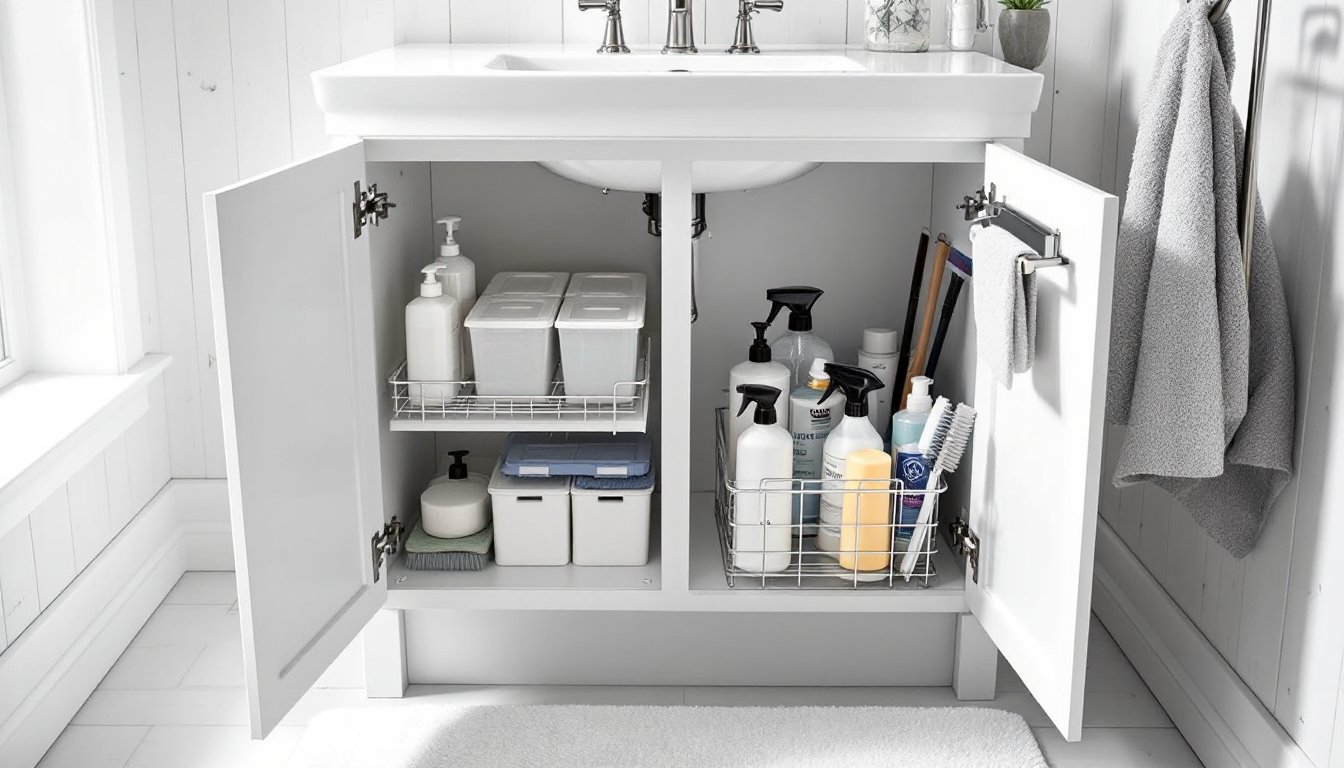
The cabinet under a bathroom sink is often a chaotic mess, cleaning supplies jammed next to half-empty bottles, everything toppling over when the cabinet door opens. That wasted vertical space and the tangle of plumbing creates a storage puzzle that most homeowners ignore. But with the right approach, that cramped cabinet can become a highly functional zone that keeps essentials accessible and organized. Whether dealing with a pedestal sink with minimal clearance or a full vanity cabinet, strategic under-sink storage transforms dead space into a hardworking part of the bathroom.
Table of Contents
ToggleKey Takeaways
- Under sink storage in bathrooms can reclaim 3–6 cubic feet of space that’s already enclosed and hidden, making it ideal for organizing essentials and reducing countertop clutter.
- Tiered shelves with U-shaped cutouts and pull-out drawer systems work effectively around plumbing obstacles while maximizing vertical space and accessibility.
- A step-by-step approach—empty, sort, measure, install, group logically, and add a liner—transforms chaotic cabinets into functional zones that prevent moisture damage and improve bathroom efficiency.
- Keep daily-use items at eye level, store cleaning chemicals separate from personal care products, and always maintain at least 2 inches of clearance around P-trap and shut-off valves for future repairs.
- Waterproof liners, clear bins for visual inventory, and strategic use of door-mounted space maximize organization while preventing leaks and mold growth in small bathroom vanities.
Why Under Sink Storage Matters in Bathroom Design
Bathrooms are typically the smallest rooms in a home, averaging 35-40 square feet for a half bath and 50-100 square feet for a full bath. Every square inch counts, especially in homes built before open-concept floor plans became standard. The cabinet under the sink represents roughly 3-6 cubic feet of potential storage, space that’s already enclosed and out of sight.
Without organization, this area becomes a catch-all for items that don’t fit elsewhere. Bottles leak, supplies expire unnoticed, and the P-trap and shut-off valves make retrieval awkward. Proper under-sink storage addresses these challenges by working around plumbing obstacles while keeping frequently used items within arm’s reach.
From a design perspective, organized under-sink storage supports the overall functionality of the bathroom. It reduces countertop clutter, eliminates the need for additional freestanding storage units, and makes cleaning routines more efficient. In rental properties or homes staged for sale, a well-organized vanity cabinet signals attention to detail and maximizes perceived value.
Practical under-sink storage also prevents moisture damage. When bottles and containers are elevated off the cabinet floor using shelves or bins, minor leaks from plumbing connections or product spills are easier to spot and clean before they cause warping or mold growth. This is especially important in bathrooms with older plumbing or high humidity levels.
Best Under Sink Storage Solutions for Bathrooms
Choosing the right storage components depends on cabinet dimensions, plumbing layout, and what needs to be stored. Most bathroom sink cabinets range from 18 to 36 inches wide, with the P-trap and water supply lines occupying the center 6-10 inches. Successful solutions work around these obstacles rather than ignoring them.
Tiered Shelves and Expandable Organizers
Tiered shelf units maximize vertical space by creating multiple levels within the cabinet. Look for models with adjustable heights or removable tiers to accommodate taller bottles on one side and shorter items on another. Many designs feature a U-shaped cutout that fits around the P-trap, positioning shelves on either side of the plumbing.
When selecting tiered shelves, measure the cabinet interior carefully, not just width and depth, but also the distance from the cabinet floor to the bottom of the sink basin. Standard units are 10-16 inches tall, but custom or stackable options can reach 20 inches if clearance allows. Materials matter: wire shelving resists moisture and allows visibility, while plastic or bamboo options offer a cleaner look but may trap condensation.
Expandable shelves adjust from 12 to 24 inches wide, making them versatile for different cabinet sizes or for use in rental properties where cabinet dimensions vary. These typically feature a tension rod or sliding mechanism that locks into place without tools. They’re ideal for renters or anyone hesitant to install permanent fixtures.
One practical tip: use the top tier for items used daily (hand soap refills, facial cleansers) and lower tiers for backups or less-frequent supplies. Group items by category, cleaning products on one side, personal care on the other, to reduce search time when the cabinet is open.
Pull-Out Drawers and Sliding Baskets
Pull-out drawer systems transform the entire cabinet into accessible storage, similar to kitchen pantry organizers. These units mount to the cabinet floor or side walls and glide forward on ball-bearing tracks, bringing the back of the cabinet within easy reach. They’re especially useful for deep vanities (18+ inches) where items pushed to the rear become forgotten.
Quality sliding systems use full-extension drawer slides rated for at least 50 pounds, though most bathroom loads won’t exceed 20-30 pounds. Installation requires a drill, screws, and about 30 minutes. Measure carefully: the drawer unit must clear the P-trap when extended, and the cabinet doors need to open fully without obstruction.
Sliding baskets offer a simpler alternative. These wire or plastic bins attach to cabinet-mounted rails and pull forward without the full mechanics of a drawer system. They’re easier to install (often clip-on or adhesive-mounted) and cost less, but don’t support as much weight. Use them for lightweight items like washcloths, cotton balls, or small toiletries.
For cabinets with double doors, consider a two-tier pull-out caddy that mounts to the door itself. These units hold spray bottles, brushes, and other cleaning tools on the inside of the cabinet door, freeing up interior space. Ensure the door hinges are sturdy enough to support the added weight, soft-close hinges often perform better than standard spring-loaded versions.
When planning storage near plumbing, leave at least 2 inches of clearance around shut-off valves and P-trap connections. Plumbers and DIYers need access for repairs or upgrades, and cramming storage too close can lead to damage or make future work unnecessarily difficult.
How to Organize Under Your Bathroom Sink Step-by-Step
Organizing under the sink isn’t just about buying bins, it requires a clear plan and honest assessment of what actually needs to be stored there. Follow this sequence for best results.
1. Empty and Clean the Cabinet
Remove everything from the cabinet. Wipe down all surfaces with a mild cleaner or a 50/50 vinegar-water solution. Check for signs of leaks, water stains, or mold. If the cabinet bottom feels damp or shows discoloration, identify and fix the source before proceeding. Use a flashlight to inspect P-trap connections and supply line fittings.
2. Sort and Purge
Group items by category: cleaning products, personal care, first aid, hair tools, backups. Discard expired medications, dried-out products, and duplicates. Anything not used in the past six months should be relocated or donated unless it’s a true backup or seasonal item.
3. Measure the Interior Space
Use a tape measure to record cabinet width, depth, and height at multiple points, cabinets aren’t always perfectly square. Note the location of the P-trap and supply lines. Write down these measurements before shopping for organizers. Standard measurements help avoid returns and ensure a proper fit.
4. Select and Install Storage Components
Based on measurements and the volume of items to store, choose a combination of solutions from the previous section. Install tiered shelves first, then add pull-out baskets or door-mounted caddies. If installing drawer slides or permanent fixtures, use a level to ensure straight alignment. For adhesive-mounted accessories, clean surfaces with rubbing alcohol before applying to improve adhesion.
5. Group Items Logically
Place daily-use items at eye level or on the most accessible shelf. Store backups and refills toward the rear or on lower tiers. Keep cleaning chemicals separate from personal care products, ideally on opposite sides of the cabinet. If young children are in the home, use childproof cabinet locks for any cabinet storing hazardous materials, even if items are on high shelves.
Consider using small bins or baskets within the larger organizer to corral similar items. For example, a narrow bin can hold travel-size toiletries, while a wider one keeps hair styling tools together. Clear bins allow quick visual inventory: opaque bins hide clutter but require labels.
6. Use Vertical Door Space
If cabinet doors open fully without hitting a wall or toilet, mount adhesive hooks or small racks on the interior. These work well for hanging brushes, washcloths, or flat items like microfiber cleaning cloths. Avoid overloading door-mounted storage, too much weight can stress hinges and cause doors to sag over time.
7. Add a Liner
Place a waterproof liner or mat on the cabinet floor. This catches drips, protects the cabinet finish, and makes cleanup easier. Cut liners to fit around the P-trap using a utility knife. Replace liners annually or whenever they show signs of mold or deterioration.
Safety Note: Always wear gloves when handling cleaning chemicals during the sort and organization process. If installing shelves or drawer systems, use safety glasses to protect against sawdust or drill debris.
For additional ideas on maximizing vertical bathroom storage, many homeowners also explore options like vertical storage units that complement under-sink organization. Design inspiration platforms like Remodelista showcase creative approaches to small-space bathroom storage, including custom cabinetry and repurposed furniture solutions. Articles on vanity organization techniques provide visual examples of drawer dividers, pull-out trays, and compartmentalized storage that can adapt to under-sink cabinets.
Conclusion
Under-sink storage in a bathroom doesn’t require a full renovation or custom cabinetry. With the right combination of tiered shelves, pull-out systems, and thoughtful organization, even the most awkward cabinet can become a functional asset. Measure carefully, install components that work around plumbing, and maintain the system with periodic purges. The result is a bathroom that feels larger, functions better, and eliminates the daily frustration of digging through a cluttered cabinet.