
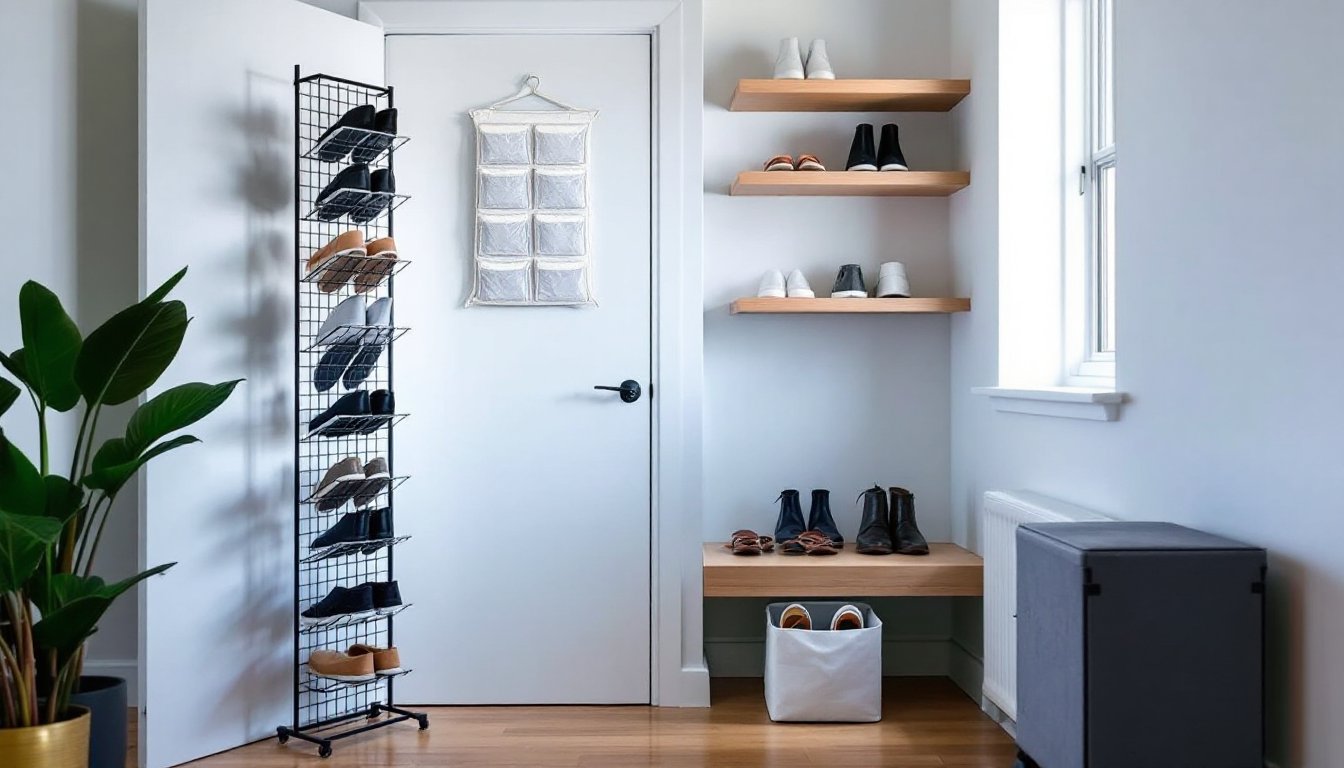
In compact homes and apartments, shoes have an annoying habit of multiplying faster than available floor space. A family of four can easily accumulate 20-30 pairs of footwear, and when square footage is tight, that pile by the door becomes a tripping hazard and an eyesore. The good news? Smart shoe storage doesn’t require sacrificing an entire closet or adding square footage. With the right combination of vertical solutions, hidden compartments, and multi-functional furniture, even the smallest entryway or bedroom can handle a full household’s footwear collection while keeping pathways clear and living spaces functional.
Table of Contents
ToggleKey Takeaways
- Small space shoe storage solutions using vertical racks, floating shelves, and wall-mounted organizers reclaim floor space while keeping footwear accessible and protected in tight homes.
- Over-the-door organizers and modular cube systems offer renter-friendly shoe storage options that require no permanent installation or wall damage.
- Multi-functional furniture like storage ottomans, under-bed bins, and built-in benches solve dual problems by combining seating or sleeping surfaces with hidden shoe storage capacity.
- DIY shoe storage projects—including PVC pipe racks, tension rod dividers, and ladder shelves—maximize awkward spaces and corners while costing $30–50 in materials compared to expensive prefab systems.
- Proper shoe storage extends footwear lifespan by maintaining shape, preventing mold and moisture damage, and avoiding the crush damage that occurs when shoes are stacked or tossed haphazardly.
- Adjustable shelving systems with customizable configurations and labeled storage encourage family accountability while speeding morning routines in homes under 1,000 square feet.
Why Proper Shoe Storage Matters in Compact Living Spaces
Clutter isn’t just an aesthetic problem, it’s a spatial efficiency issue. Shoes left scattered across floors reduce usable square footage, create tripping hazards, and accelerate wear on footwear materials. Leather needs air circulation to prevent mold: athletic shoes benefit from drying between uses. Without designated storage, dirt and moisture track deeper into living areas, increasing cleaning time and flooring maintenance.
In homes under 1,000 square feet, every item needs a defined location. Shoe storage that works in tight quarters follows three principles: vertical orientation to preserve floor space, enclosed or semi-enclosed designs to control dust and odor, and accessibility so daily-wear pairs stay within arm’s reach. Ignoring these basics leads to the classic small-space trap, buying organizers that take up more room than the shoes themselves.
Proper storage also extends shoe lifespan. Stacking dress shoes directly atop one another crushes heels and distorts toe boxes. Tossing boots in a bin collapses shafts. A $15 shoe rack that maintains shape can save hundreds in premature replacements. For renters, non-permanent solutions like tension rods and adhesive hooks preserve security deposits while solving storage gaps.
Vertical Shoe Storage Solutions That Save Floor Space
When floor area is limited, the only direction to build is up. Vertical storage reclaims wall space that typically sits empty while keeping shoes visible and accessible.
Over-the-Door Organizers and Wall-Mounted Racks
Over-the-door organizers are the easiest zero-installation option for renters. Models with clear vinyl pockets hold 12-24 pairs and hang on standard interior doors (1⅜” or 1¾” thick). Choose reinforced metal hooks rated for 15+ pounds to prevent sagging. Mesh versions offer better ventilation for sweaty sneakers compared to solid fabric pockets.
One limitation: over-the-door racks add 4-6 inches of door swing clearance. In tight hallways, this can block passage. For narrow spaces, consider wall-mounted slat racks instead. These attach directly to studs with lag bolts (find studs using a magnetic stud finder at 16″ on-center spacing) and angle shoes slightly upward to prevent slipping.
Floating shelves work well for display-worthy footwear. Install 8-10 inch deep shelves using heavy-duty brackets anchored into studs. Standard ¾” plywood or pine boards (actual dimensions: ¾” x 7¼”) support multiple pairs when properly secured. Space shelves 6-8 inches apart vertically to accommodate sneakers and low-profile flats: allow 12-14 inches for boots or high-tops.
For those seeking creative approaches to organizing vertical storage, modular cube systems like the IKEA Kallax can be wall-mounted horizontally. Each 13″ cube holds two pairs of adult shoes when fitted with fabric bins. Secure units to wall studs using L-brackets to meet tip-over prevention standards, especially critical in homes with children or pets.
Hidden and Multi-Functional Shoe Storage Ideas
The best small-space storage does double duty, hiding clutter while serving another function.
Under-Bed Storage and Ottoman Benches
The average bed frame creates 12-18 inches of vertical clearance underneath, prime real estate for seasonal or less-worn shoes. Rolling under-bed bins with lids keep dust off footwear while sliding out easily on casters. Look for bins measuring 6-8 inches high to fit under platform beds: taller models (10-12 inches) work with standard metal frames.
For visibility, choose clear plastic bins or models with viewing windows. Cedar-lined fabric boxes prevent odors and deter moths in leather dress shoes, but add $20-30 per unit compared to basic plastic. Measure床底clearance before buying, a tape measure beats guessing every time.
Storage ottomans solve two problems: seating and shoe storage. A 30″ x 18″ bench ottoman holds 6-9 pairs while providing a perch for putting on boots. Hinged-lid models offer quicker access than zippered sides. Place one in an entryway for drop-and-go storage, or at the foot of a bed to replace a traditional chest.
Built-in bench seating with lift-up lids works in mudrooms or breakfast nooks. Constructing one requires basic carpentry: a 2×4 frame (actual 1½” x 3½”), ¾” plywood for the seat and sides, and piano hinges rated for 50+ pounds. Finish with cushions cut to size. This project suits intermediate DIYers comfortable with a circular saw and drill.
Other hidden options include hollow coffee tables with removable tops and console tables with pull-out drawers sized for shoes. When evaluating furniture for dual purposes, measure interior dimensions, many decorative pieces have interiors too shallow for adult shoes (which average 11-13 inches long for men’s sizes, 9-11 inches for women’s). Solutions targeting small-space challenges often incorporate similar multi-functional principles.
Creative DIY Shoe Storage Projects for Tight Spaces
Custom builds maximize odd corners and awkward nooks that prefab units can’t address.
PVC pipe shoe racks turn 4″ or 6″ PVC pipe into individual cubbies. Cut pipes into 12-14 inch lengths using a hacksaw or PVC cutter, sand edges smooth, then stack and glue them in a honeycomb pattern with PVC cement. Mount the finished grid to a wall or set it inside a closet. Each tube holds one pair. This project costs $30-50 in materials for a 12-pair rack.
Tension rod dividers installed vertically in closets create shoe slots without permanent mounting. Place two tension rods 10-12 inches apart, then slide shoes in sideways between them. Works best for flats and low-profile sneakers: boots and heels won’t fit. Tension rods rated for 10-20 pounds prevent slipping.
Repurposed wooden crates or wine boxes stacked and secured with L-brackets form rustic open shelving. Sand rough edges, apply polyurethane or paint, then mount to wall studs. Leave crates open for ventilation or add fabric liners. A stack of four crates (each roughly 12″ x 18″) holds 8-12 pairs depending on shoe size.
For advanced DIYers, a sliding shoe drawer under stairs uses wasted space. Build a shallow drawer box from ¾” plywood, install full-extension drawer slides rated for 75-100 pounds (Blum or KV brand), and add a false riser panel as a pull. This requires accurate measurements, a table saw or track saw for rip cuts, and patience fitting slides in tight quarters. Expect 6-8 hours of work for a first-timer.
Ladder-style shoe shelves lean against walls without mounting. Construct one using 1×6 boards (actual ¾” x 5½”) for shelves and 1×3 (¾” x 2½”) for side rails. Cut rails at a 10-15 degree angle, space shelves 8-10 inches apart, and secure with wood screws and wood glue. Apply felt pads to bottom ends to protect flooring. Enthusiasts can find more organizing concepts that apply similar spatial thinking.
Space-Saving Shoe Racks and Shelving Systems
Off-the-shelf racks work when chosen with actual dimensions, not marketing photos, in mind.
Narrow tower racks measuring 6-10 inches deep fit in closets, behind doors, or along hallways. Models with angled shelves (typically tilted 15-20 degrees) display shoes toe-out for easy identification. Metal wire racks promote airflow: solid wood or composite shelves catch dirt but require periodic cleaning. A 5-tier tower holds 10-15 pairs in roughly 2 square feet of floor space.
Stackable modular racks adapt to changing collections. Interlocking plastic or metal frames connect vertically or horizontally. Start with one unit, add more as needed. Look for ventilated designs, solid plastic traps moisture and odor. Weight capacity matters: cheaper units rated under 5 pounds per shelf buckle under boots or men’s work shoes.
Slim rolling carts (12-18 inches wide) tuck into closets and pull out for access. Metal mesh construction weighs less and allows air circulation. Lock wheels if placing on carpet to prevent unintended rolling. These work well in bedroom closets where floor-to-ceiling space exists but lateral room doesn’t.
For those managing compact storage spaces, adjustable shelving units like the Elfa system (sold at The Container Store) or IKEA’s Algot offer customizable configurations. Tracks mount to wall studs: shelves and brackets adjust in 1-inch increments. Plan for 8-10 inch shelf depth minimum. Shallow shelves save space but shoes may overhang: deeper (12-14 inch) shelves accommodate boots and boxes.
Expandable shoe racks adjust from 24″ to 45″ wide, fitting variable closet widths. Spring-loaded or twist-lock mechanisms hold width. Metal construction outlasts plastic: look for powder-coated finishes to prevent rust in humid climates. Place these on closet floors or inside cabinets.
According to organizing experts, pairing racks with labels or photos speeds morning routines and keeps family members accountable for their footwear. Simple solutions, like tension rods, baskets, or hooks, often outperform expensive systems when matched to actual habits.