
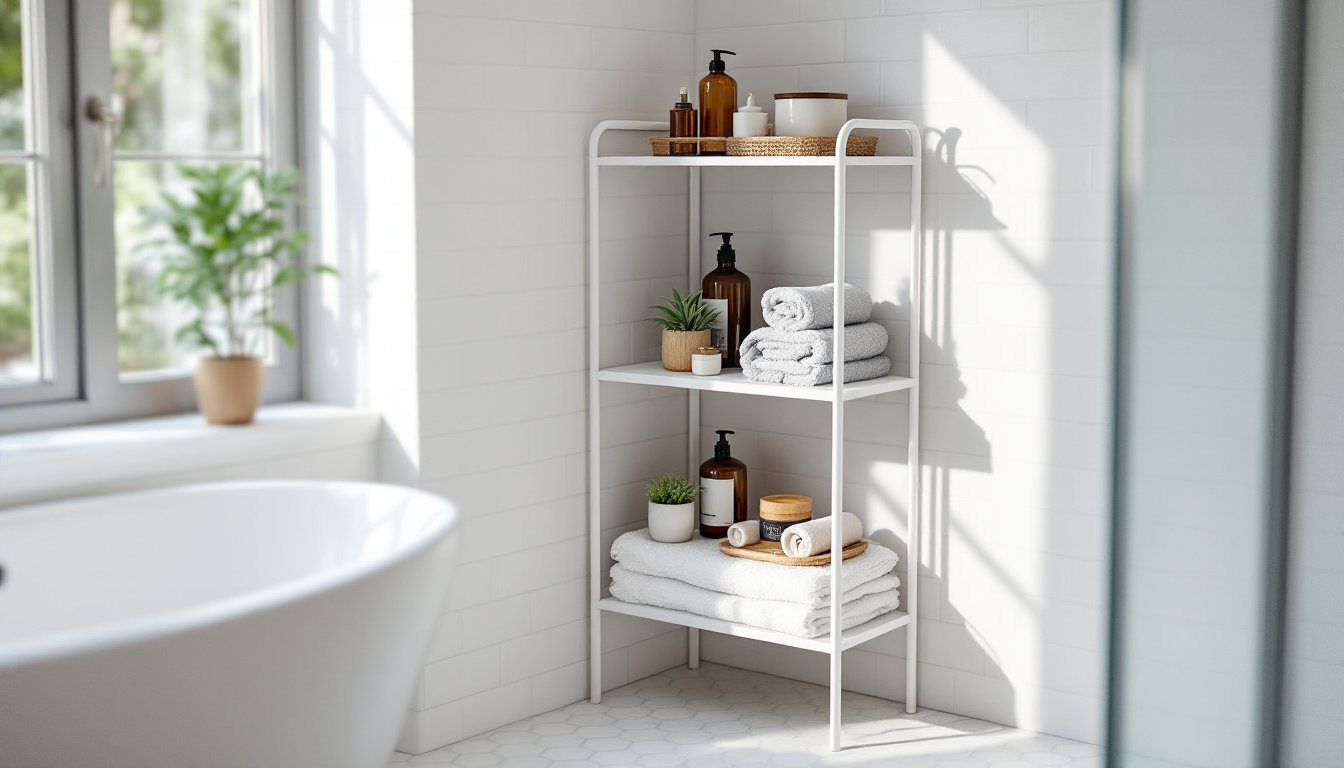
Most bathrooms waste their most valuable real estate: the corners. While homeowners obsess over vanity upgrades and tile selections, those 90-degree angles gather dust, or worse, clutter. Corner spaces offer vertical storage potential without eating into floor space, making them ideal for tight bathrooms where every square inch counts. Whether dealing with a cramped powder room or a master bath that never seems to have enough storage, corner solutions can add functionality without a gut renovation. This guide walks through proven storage strategies, DIY-friendly projects, and selection criteria to turn awkward corners into organized, accessible storage zones.
Table of Contents
ToggleKey Takeaways
- Corner bathroom storage reclaims 4–6 cubic feet of unused space per corner without reducing floor space or requiring major renovations.
- Floating shelves and wall-mounted cabinets offer stronger load capacity and cleaner aesthetics than freestanding units, but require proper stud anchoring and moisture-resistant materials like sealed wood or powder-coated metal.
- DIY corner storage projects like ladder shelves and floating shelves can be completed in a weekend for under $50 using basic tools, pocket hole joinery, and water-based finishes for humidity protection.
- Measure door swing clearance and ceiling height before selecting corner storage, and prioritize enclosed cabinets in humid bathrooms without exhaust fans to prevent moisture damage and mold growth.
- Corner vanities and recessed medicine cabinets may require permits, structural engineering, or licensed plumber involvement if plumbing relocation or wall modification is necessary.
Why Corner Spaces Are Your Bathroom’s Hidden Storage Goldmine
Corners represent dead space in most bathroom layouts. Standard rectilinear cabinets, towel bars, and wall-mounted fixtures ignore these areas entirely, leaving 6-12 inches of depth unused on two walls.
The geometry works in a homeowner’s favor. A corner shelf or cabinet occupies minimal floor footprint, often less than one square foot, while providing multiple tiers of storage that reach upward. In a 5×8-foot bathroom, reclaiming just two corners can add 4-6 cubic feet of usable storage without crowding walkways or door swings.
Vertical corner installations also keep items within arm’s reach. Unlike overhead cabinets that require step stools or deep under-sink cavities that swallow bottles, corner units place toiletries, linens, and cleaning supplies at eye level and hand height. This accessibility matters for daily-use items like soap, razors, and skincare products.
From a design perspective, corner storage breaks up blank walls and adds visual interest. A well-chosen corner shelf or cabinet creates focal points that draw the eye upward, making small bathrooms feel taller and more intentional. Combined with the right materials, glass, metal, or finished wood, these installations can match existing fixtures rather than looking like afterthought add-ons.
Best Corner Storage Solutions for Small Bathrooms
Corner Shelving Units and Floating Shelves
Freestanding corner shelf units are the quickest fix. Most models feature three to five tiers held by a vertical pole or open frame, standing 60-72 inches tall with a triangular or quarter-round footprint. Look for rust-resistant materials, powder-coated steel, aluminum, or marine-grade plastic, since bathroom humidity accelerates corrosion. Units with adjustable shelves accommodate taller bottles or rolled towels.
Installation requires no tools beyond a level to check plumb. Place the unit on a dry, level floor: if tile grout lines create wobble, add adhesive furniture pads to stabilize the base. Weight capacity typically ranges from 10-15 pounds per shelf, sufficient for standard toiletries but not heavy storage jars or multiple wet towels.
Wall-mounted floating shelves offer a cleaner look and stronger load ratings. Corner floating shelves mount via hidden brackets anchored into wall studs or blocking. Standard corner shelves span 8-12 inches per side with 1-2 inch thickness, made from solid wood, MDF with veneer, tempered glass, or powder-coated metal.
Installation demands attention to stud location. Use a stud finder to mark framing behind drywall: if studs don’t align with the desired shelf position, install horizontal blocking between studs or use heavy-duty toggle bolts rated for 50+ pounds in 1/2-inch drywall. Always wear safety goggles when drilling tile, use a carbide-tip masonry bit at low speed with water to prevent cracking.
Glass corner shelves work well in modern or minimalist bathrooms but show water spots and require frequent cleaning. Wood or composite shelving options handle moisture better when sealed with polyurethane or marine varnish. Avoid particleboard: it swells and delaminates in humid environments.
Corner Cabinets and Vanities
Corner floor cabinets provide enclosed storage that hides clutter. These units stand 30-36 inches tall with a triangular or curved front, often featuring one or two doors and an interior shelf. Solid wood or plywood construction with moisture-resistant finish (conversion varnish or catalyzed lacquer) ensures longevity. Avoid MDF-core cabinets unless they’re specifically rated for wet environments.
Installation on tile floors requires shimming to level: use composite shims (not wood, which compresses) and check with a 24-inch level on two axes. Secure taller cabinets to wall studs with L-brackets to prevent tip-over, especially if children are present.
Corner vanities replace standard vanities in truly space-constrained bathrooms. These units nestle into a corner with angled or curved fronts, incorporating a sink and storage below. Sizing typically starts at 24 inches per wall, smaller than the standard 36-48 inch vanity. This configuration opens up floor space for doors and movement while maintaining a functional wash station.
Plumbing adaptations may be necessary. Corner vanities require drain and supply lines in or near the corner: if existing plumbing is centered on one wall, relocating involves cutting into walls and possibly rerouting vent stacks. This qualifies as structural plumbing work in most jurisdictions and requires a permit and licensed plumber. DIYers comfortable with PEX or copper can handle supply line extensions, but drain work must meet IRC P3005 and local codes for slope and venting.
Corner medicine cabinets recessed into wall cavities provide concealed storage without protruding into the room. Standard recess depth is 3.5-4 inches (the depth of a 2×4 stud wall), limiting capacity but maintaining a flush profile. Surface-mount corner medicine cabinets extend 4-6 inches from the wall and hold more but can interfere with door swings.
Before cutting drywall for recessed installation, verify no plumbing, electrical, or HVAC runs occupy the cavity. Use a non-contact voltage tester and inspection camera if unsure. Cutting into a load-bearing wall without proper headers violates IRC R602 and compromises structural integrity, consult a structural engineer or contractor before modifying framing.
DIY Corner Bathroom Storage Projects You Can Build This Weekend
Corner ladder shelf: Build a leaning corner shelf using two 1×4 boards (actual dimensions 3/4″ × 3.5″) for uprights and 1×6 or 1×8 boards for shelves. Cut uprights to 72 inches: cut shelves in ascending lengths (e.g., 10″, 12″, 14″, 16″) to create a tapered profile that fits snugly into the corner. Attach shelves with 1.25-inch pocket screws using a pocket hole jig, spacing shelves 12-14 inches apart.
Finish with 150-grit sandpaper, then apply two coats of water-based polyurethane or spar varnish for moisture resistance. Allow 4-6 hours between coats. Lean the completed unit into the corner: add adhesive silicone bumpers to the wall-contact points to prevent scratching painted walls. This project requires a drill/driver, pocket hole jig, miter saw or circular saw, and basic measuring tools. Expect 3-4 hours of work plus drying time.
Floating corner shelves from reclaimed wood: Cut 1×8 or 1×10 boards into right triangles with 10-12 inch legs using a circular saw or miter saw. Sand edges and apply finish. Mount using concealed floating shelf brackets rated for 20+ pounds: these L-shaped brackets screw into studs with the horizontal arm supporting the shelf from below.
Locate studs 16 or 24 inches on center (standard framing). If the corner doesn’t align with studs on both walls, install one bracket into a stud and use a heavy-duty toggle bolt (rated 50+ pounds in 1/2″ drywall) for the opposite side. Predrill shelf mounting holes from underneath to avoid splitting the wood. Level each shelf in two directions before fully tightening mounting screws.
PVC pipe corner organizer: Use 3-inch or 4-inch diameter PVC pipe cut into 6-8 inch sections to create cylindrical cubbies. Cut with a PVC saw or miter saw fitted with a fine-tooth blade: deburr edges with sandpaper. Arrange sections in a pyramid or stacked configuration, bonding with PVC cement or hot glue. Mount the assembly to the wall with construction adhesive or by screwing through the back of lower sections into studs.
Paint with spray paint formulated for plastic (Krylon Fusion or Rust-Oleum Universal). This design works well for storing rolled towels and toiletries in a visually interesting way. The entire project costs under $20 and takes about 2 hours.
Safety notes: When cutting or drilling, always wear safety goggles and a dust mask, especially with MDF or treated lumber. Use a respirator-rated mask when applying solvent-based finishes in unventilated bathrooms. Keep power tools away from water sources and ensure GFCI protection on outlets.
How to Choose the Right Corner Storage for Your Bathroom Layout
Start by measuring the corner dimensions and door swing clearance. Measure from the corner outward along each wall to the nearest obstruction (door, toilet, vanity edge). Subtract 3-4 inches to ensure the storage unit doesn’t interfere with movement or create pinch points. If the bathroom door swings inward, verify the storage won’t block the door at any point in its arc.
Consider ceiling height and scale. Tall corner shelving units (60+ inches) work in bathrooms with 8-foot or higher ceilings but can overwhelm rooms with lower ceilings or sloped soffits. In tight spaces, two or three smaller floating shelves create storage without the visual weight of a floor-to-ceiling unit.
Match the storage type to what it will hold. Open shelving suits decorative items and frequently used toiletries but exposes everything to dust and humidity. Enclosed cabinets hide clutter and protect contents from moisture but require door clearance and cost more. Hybrid solutions, like a cabinet base with open shelves above, balance concealment and accessibility.
Humidity and ventilation matter. Bathrooms without exhaust fans or windows experience higher moisture levels that warp wood, rust metal, and encourage mold. In these environments, prioritize plastic, powder-coated metal, or marine-grade finishes over raw wood or unprotected steel. If adding wood storage, ensure the bathroom has an exhaust fan rated for the room’s square footage (CFM = square footage × 1.1 for bathrooms, per HVI standards).
Check load requirements. A shelf holding three folded towels bears different weight than one loaded with glass jars and heavy bottles. Standard floating shelf brackets support 20-30 pounds when anchored into studs: freestanding units max out around 15 pounds per tier. If planning heavier storage, invest in commercial-grade brackets or build custom shelving with deeper wall anchors.
For design integration, coordinating finishes with existing fixtures creates cohesion. Match metal finishes (chrome, brushed nickel, oil-rubbed bronze) to faucets and towel bars. If the bathroom features wood cabinetry, select corner storage in the same species and stain color, or opt for a complementary neutral like white or gray.
Permit requirements vary by project scope. Installing freestanding shelves or surface-mounted brackets requires no permit. Recessing cabinets into walls, moving plumbing for a corner vanity, or altering framing typically requires permits and inspections per local building codes. Always check with the local building department before starting structural or plumbing work.
Conclusion
Corner storage transforms overlooked bathroom spaces into functional, organized zones without major renovation costs or floor space sacrifices. Whether installing a $30 tension pole shelf or building custom floating shelves from reclaimed wood, these solutions prove that smart storage doesn’t require square footage, just intentional use of vertical space and forgotten corners. Measure carefully, match the storage type to both the space and contents, and don’t skip moisture-resistant finishes or proper anchoring. The result: a bathroom that finally has a place for everything.