
Truck beds are workhorses, but they’re also weather sieves. Rain, snow, road spray, and dust funnel straight into the cargo area, turning tools into rust buckets and camping gear into soggy messes. If someone’s hauling anything that can’t take a soaking, power tools, electronics, or supplies, waterproof storage isn’t optional. It’s the difference between functional cargo space and a liability. This guide walks through the storage solutions that actually seal out moisture, how to pick the right setup for specific needs, and what it takes to install and maintain them for years of reliable use.
Table of Contents
ToggleKey Takeaways
- Waterproof truck bed storage protects tools, equipment, and cargo from rust, corrosion, and moisture damage while also deterring theft and securing valuable gear on job sites.
- Hard-shell tonneau covers with EPDM rubber gaskets, crossover toolboxes, and DECKED drawer systems each serve different needs—choose based on how frequently you access items and your truck’s payload capacity.
- Proper installation and gasket maintenance are critical: inspect seals every 3–6 months, replace them as soon as they show cracks or compression set, and apply rubber conditioner twice yearly to prevent premature failure.
- IP65 or IP67-rated portable bins offer genuine waterproof protection for electronics and moisture-sensitive items, while tonneau covers and truck-mounted boxes provide practical weather resistance for daily use without submersion.
Why Waterproof Storage Is Essential for Truck Beds
Truck beds are designed to drain water, not keep it out. Tailgate seals wear down, stake pocket holes let in rain, and even tight-fitting tonneau covers can leak at the seams during heavy downpours or highway speeds. Moisture doesn’t just ruin what’s being hauled, it accelerates corrosion on the bed itself, especially around bolt holes and under cargo mats.
Rust and corrosion are the long-term threats. Steel beds without proper bed liners can pit and oxidize within a year if moisture sits unchecked. Aluminum beds fare better but still suffer from galvanic corrosion where dissimilar metals meet (mounting hardware, tie-downs). Waterproof storage keeps tools, fasteners, and metal equipment dry, preventing them from becoming rust-welded to the bed surface.
For contractors, tool protection is a financial issue. A cordless drill exposed to rain can short out or develop battery corrosion. Hand tools left damp will rust, and replacement costs add up fast. Weekend warriors face similar stakes with camping gear, fishing tackle, or hunting equipment, items that degrade quickly when stored wet.
Security overlaps with waterproofing. Hard-shell storage boxes and locking tonneau covers deter theft while sealing out the elements. Leaving gear visible and unprotected invites both weather damage and opportunistic theft, especially in parking lots or job sites.
Waterproof storage also protects gear during off-road use. Mud, creek crossings, and dust storms can infiltrate open beds. Sealed boxes keep electronics, recovery gear, and spare parts functional when they’re needed most, miles from pavement.
Types of Waterproof Truck Bed Storage Solutions
Hard-Shell Tonneau Covers with Integrated Storage
Hard folding and retractable tonneau covers provide full-bed protection and work well for bulk storage. Models like tri-fold hard covers seal with EPDM rubber gaskets along the rails and tailgate, keeping out most rain and road spray. They’re not submarine-grade, standing water or pressure washing can seep through, but they handle normal weather and highway driving.
Retractable covers (canister-style) offer quick access and lockable security. They roll into a housing at the front of the bed, leaving the rest open for loading. Weatherproofing depends on the rail system: look for covers with integrated drain channels that route water away from the bed rather than into it.
One-piece hinged covers (like those from UnderCover or BAKFlip) provide the tightest seal. They lift from the rear or fold in sections, and the perimeter gasket compresses when locked. These work well for long-term storage of items that can’t tolerate any moisture, battery packs, electronics, paper documents.
Tonneau covers don’t organize cargo, though. They keep the bed dry but won’t prevent tools from sliding around. Pair them with bed dividers or cargo nets for better control.
Waterproof Storage Boxes and Toolboxes
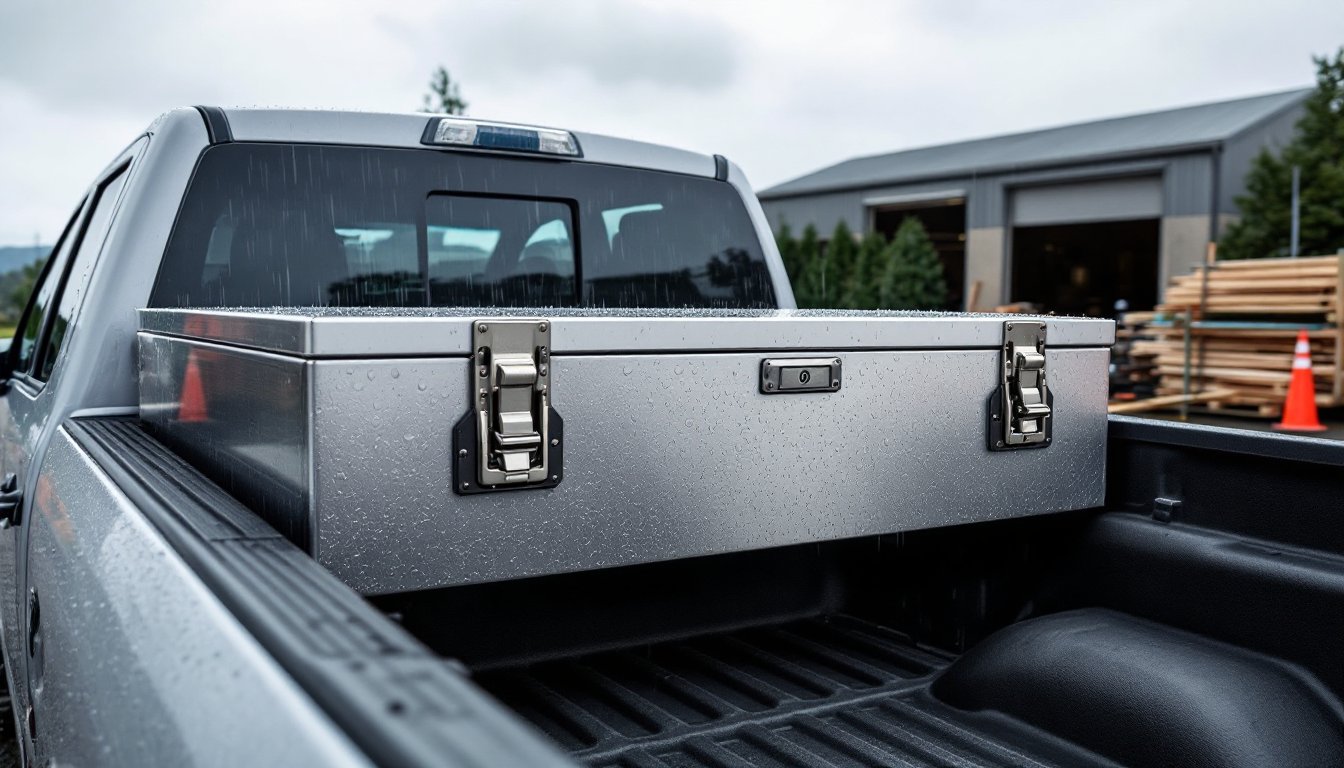
Crossover toolboxes mount behind the cab, spanning the bed width. They’re aluminum or steel, with rubber gaskets on the lid and drain holes at the bottom. These boxes are waterproof in practice but not submersible, they’ll keep out rain and snow, but if the truck bed fills with water (say, from a heavy storm or car wash), some seepage can occur.
Look for boxes with continuous hinges (not stamped tabs) and twist-lock latches. The gasket should be replaceable: most deteriorate after 3-5 years of UV exposure. Popular Mechanics’ reviews of truck bed organizers highlight models with reinforced lids that double as work surfaces, a useful feature for job sites.
Deck boxes and portable bins (like Plano, DECKED drawers, or Pelican cases) fit inside the bed and can be removed as needed. Hard-sided bins with O-ring seals (IP65 or IP67 rated) are genuinely waterproof, they’ll float and keep contents dry even if submerged. These are ideal for electronics, medical kits, or anything moisture-sensitive.
DECKED drawer systems install as a permanent platform, splitting the bed into upper and lower storage. The drawers have weatherproof seals and drain channels, and the top surface supports full payload ratings. It’s a clean setup for contractors who need organized, protected storage without losing bed capacity.
Side-mount boxes (wheel well or rail-mount) save bed floor space but offer less volume. They’re good for straps, jumper cables, and smaller tools. Bob Vila’s tests of truck tool boxes note that side-mount options often have weaker seals than crossover models, so they’re better suited for items that can tolerate occasional dampness.
How to Choose the Right Waterproof Storage for Your Truck
Start with how the truck gets used. Daily drivers hauling groceries and weekend gear don’t need the same setup as work trucks carrying $5,000 in power tools. Contractors benefit from crossover toolboxes or drawer systems that lock and organize. Recreational users might prefer a tonneau cover paired with portable waterproof bins that can be pulled out for camping or tailgating.
Bed size matters. Short beds (5.5–6 feet) have limited space: a full-width crossover box eats 12–18 inches of length, which can make fitting plywood or lumber awkward. Consider side-mount boxes or low-profile deck systems that preserve usable bed length. Long beds (8 feet) have room for multiple storage solutions without compromising hauling capacity.
Access frequency determines the format. If tools or gear are needed daily, a tonneau cover that requires unlatching multiple points is a hassle. Retractable covers or drawer systems offer faster access. For items stored long-term (emergency kits, seasonal gear), a locked crossover box works fine.
Payload and towing can’t be ignored. Heavy toolboxes, especially aluminum crossovers filled with tools, add 150–250 pounds, which cuts into payload capacity. DECKED systems are designed to preserve payload ratings, but always check the truck’s door jamb sticker to stay within limits. Towing with a fifth-wheel or gooseneck hitch may rule out certain crossover boxes that interfere with hitch placement.
Weatherproofing standards vary. Look for IP ratings (Ingress Protection) on portable boxes: IP65 is dust-tight and water-resistant (splashes and rain): IP67 can handle temporary submersion. Tonneau covers and truck-mounted boxes won’t carry IP ratings but should specify gasket material (EPDM or silicone) and whether they have drain channels.
Locking mechanisms add security but vary in strength. Twist locks and paddle locks deter casual theft: pry-resistant hinges and reinforced strike plates (found on higher-end boxes) slow down determined thieves. No truck bed storage is theft-proof, if security is critical, consider an alarm system or parking in a garage.
Budget and longevity go hand in hand. A $200 plastic toolbox might last two years before the gasket fails and the hinges crack. A $600 aluminum crossover with a lifetime warranty is a better investment for daily use. Factor in replacement gaskets, lock cylinders, and potential paint touch-ups (steel boxes can chip and rust if not maintained).
Installation and Maintenance Tips for Long-Lasting Protection
Crossover toolbox installation is straightforward but requires precision. Most mount to the bed rails with C-clamps or bolt-through brackets. Measure twice, boxes need to sit level, or lids won’t seal properly. Use a carpenter’s level across the length and width before tightening hardware. Torque clamps to the manufacturer’s spec (usually 15–20 ft-lbs) to avoid crushing the rail or under-tightening, which lets the box shift.
If drilling into the bed, seal bolt holes with silicone or use rubber-backed washers to prevent water intrusion. Avoid drilling through the bed floor unless absolutely necessary: it voids corrosion warranties on most truck beds. Side-rail mounts are reversible and don’t compromise the bed structure.
Tonneau cover installation varies by model. Clamp-on covers require no drilling and adjust for bed width: they’re DIY-friendly but may loosen over time and need periodic retightening. Bolt-on covers are more secure but permanent, drilling into rails is required. Follow the instructions for rail placement: even a 1/4-inch misalignment can cause the cover to leak or not latch properly.
Run a bead of automotive sealant (not silicone, it degrades with UV exposure) under rail mounts to prevent water from wicking between the rail and bed. Many installers skip this, and it leads to rust stains within a year.
Gasket maintenance is the key to long-term waterproofing. Inspect seals every 3–6 months for cracks, compression set (permanent flattening), or UV damage. Clean gaskets with mild soap and water, no petroleum-based cleaners, which break down rubber. Apply a rubber conditioner (303 Protectant or similar) twice a year to prevent drying and cracking.
Replace gaskets as soon as they show signs of failure. Most manufacturers sell replacement kits for $20–$50, and swapping them takes 15 minutes. Waiting until the box leaks means dealing with rusty tools or water-damaged cargo.
Drain holes in toolboxes should stay clear. They’re not a design flaw, they let condensation escape. If a box seals perfectly but traps humidity, contents can still rust or mildew. Check drain holes monthly and clear any debris. Don’t plug them with silicone: that defeats their purpose.
For DECKED systems and drawer organizers, lubricate drawer slides annually with dry silicone spray (not WD-40, which attracts dust). Tighten mounting bolts after the first 500 miles, as vibration can loosen hardware during initial use.
Winter prep matters in cold climates. Rubber gaskets stiffen in freezing temps and may not seal as tightly. Warm the truck before opening lids to avoid cracking brittle seals. Store de-icing salt and wet gear in sealed plastic bins inside the toolbox, salt residue corrodes aluminum and steel.
UV protection extends the life of any bed storage. Park in shade when possible, or use a UV-resistant spray on plastic components. Aluminum and steel boxes benefit from annual waxing (same as vehicle paint) to prevent oxidation and fade.
Inspect mounting hardware every 6 months, especially if the truck sees rough roads or off-road use. Vibration loosens bolts over time. A quick check and re-torque takes minutes and prevents a $500 toolbox from flying out mid-highway, yes, it happens, and home repair guides are full of cautionary tales about under-secured cargo.
Conclusion
Waterproof truck bed storage isn’t about luxury, it’s about preserving tools, gear, and the truck itself. Hard-shell tonneau covers, sealed toolboxes, and drawer systems each solve different problems, and the right choice depends on how the truck gets used. Install carefully, maintain gaskets, and check hardware regularly, and the storage will outlast the truck.